


Why shifting your expectations around your estimated due date might be one of the best things you do to prepare for birth.
One of the things I encourage my birth doula clients to do, regardless of whether they're expecting their first or fourth baby, is to prepare to be pregnant for 42 weeks.
Yes, 42.
Not because I necessarily expect them to be pregnant that long, but because I've seen what happens emotionally and mentally when someone is convinced they'll have a baby in their arms by a particular date.
We spend so much of pregnancy counting down. We download apps. We circle dates on the calendar. We tell our friends, family members, coworkers, and even strangers in the grocery store when we're due. We make plans around a date that, from the very beginning, was only ever an estimate.
And then, when that date comes and goes, it can feel like something has gone wrong.
But what if we approached the end of pregnancy a little differently?
Your due date is an estimate, not an expiration date
There's a reason we use the term estimated due date (EDD). As much as we would love to know exactly when our babies will arrive, we simply don't.
Traditionally, an estimated due date is calculated using 40 weeks from the first day of your last menstrual period. An early ultrasound can help establish or confirm that date, but neither method can tell us precisely when spontaneous labor will begin.
Your due date is an important clinical reference point. It helps your healthcare provider assess your baby's growth and development and make recommendations about your care. But it isn't an appointment your baby has agreed to keep.
Babies aren't particularly concerned with our calendars.
Is it normal to go past your due date?
Absolutely. Pregnancy doesn't suddenly become abnormal the moment you reach 40 weeks.
In fact, what we commonly refer to as a full-term pregnancy encompasses more than a single week.

If this is your first baby, you may also be more likely to experience a longer pregnancy.
Of course, there are medical considerations as pregnancy progresses, and the recommendations for your care may change. But being pregnant on the day after your estimated due date is not, in and of itself, an indication that your body has failed to do something.
The mental toll of counting down to your due date
As a birth doula, I've come to appreciate just how much of the birth experience is mental and emotional. And that experience begins well before the first contraction.
Imagine spending months anticipating a particular date. You've finished working. The nursery is ready. Your hospital bag is packed. The freezer is stocked. You've washed all the impossibly tiny baby clothes.
And now you're waiting.
Every morning you wake up wondering if today will be the day. Every unfamiliar sensation gets your attention. Every evening you go to bed a little disappointed.
Meanwhile, your phone is blowing up with messages.
Any signs of labor?
Baby here yet?
When are they going to induce you?
What started as excitement can quickly turn into frustration, impatience, anxiety, and even a sense of failure.
And you haven't even gone into labor yet.
This is why I encourage my clients to mentally prepare for a 42-week pregnancy. I want them to have some emotional reserves left for labor, birth, and the transition into life with their baby.
Not everything that takes longer than you anticipated is taking too long.
What if you had a due window instead of a due date?
One simple mindset shift is to begin thinking about a window of time rather than a specific day.
Instead of telling everyone you're due on May 10, consider saying:
We're expecting a baby sometime in May.
We're hoping to meet our little one in mid-to-late May.
Baby should be here sometime around the middle of the month.
We'll let you know when there's news to share!
You're not obligated to give everyone access to the details of your pregnancy. And you certainly don't owe anyone daily updates about the state of your cervix.
Being intentionally vague about your due date can give you a little more breathing room in those final weeks.
How to prepare for pregnancy beyond 40 weeks
Preparing for a potentially longer pregnancy doesn't mean spending two extra weeks sitting around waiting for something to happen. In fact, I'd encourage you to do quite the opposite.
1. Keep living your life
Make a lunch reservation. Schedule a pedicure. Go to the movies. Meet a friend for coffee. Start a new book. Plan a date night with your partner.
Make plans that are easy to change, of course, but give yourself something to look forward to besides going into labor.
You don't have to put your entire life on hold while you wait to meet your baby.
2. Give yourself permission to rest
There is no prize for exhausting yourself before labor begins.
You don't have to spend hours walking, bouncing on a birth ball, curb walking, or trying every natural induction method you come across on Instagram.
Movement can feel wonderful toward the end of pregnancy. So can a nap.
Listen to your body's needs rather than approaching every activity as a means of getting labor started.
3. Set boundaries around pregnancy updates
If the constant check-ins are starting to wear on you, it's perfectly reasonable to let people know.
You might say:
We're just as excited to meet this baby as you are! For now, we're enjoying these last few days together and will be sure to share an update when we have news.
You can appreciate someone's excitement without making yourself responsible for managing their impatience.
4. Build flexibility into your postpartum plans
When possible, allow some wiggle room with family visits, meal deliveries, time off work, childcare arrangements, and other postpartum support.
Not everyone has the luxury of flexible leave or unlimited resources, which is one reason the timing of birth can feel particularly stressful. Talk through different scenarios with your support people ahead of time so you're not trying to rearrange everything at 40 weeks and five days.
5. Practice getting comfortable with uncertainty
So much of pregnancy, birth, and parenting involves making plans while recognizing that things may unfold differently.
The final weeks of pregnancy can be an opportunity to practice that.
What helps you feel grounded when things are outside of your control? What brings you comfort? Who can you turn to when you're feeling discouraged?
These are tools that will serve you well beyond pregnancy.
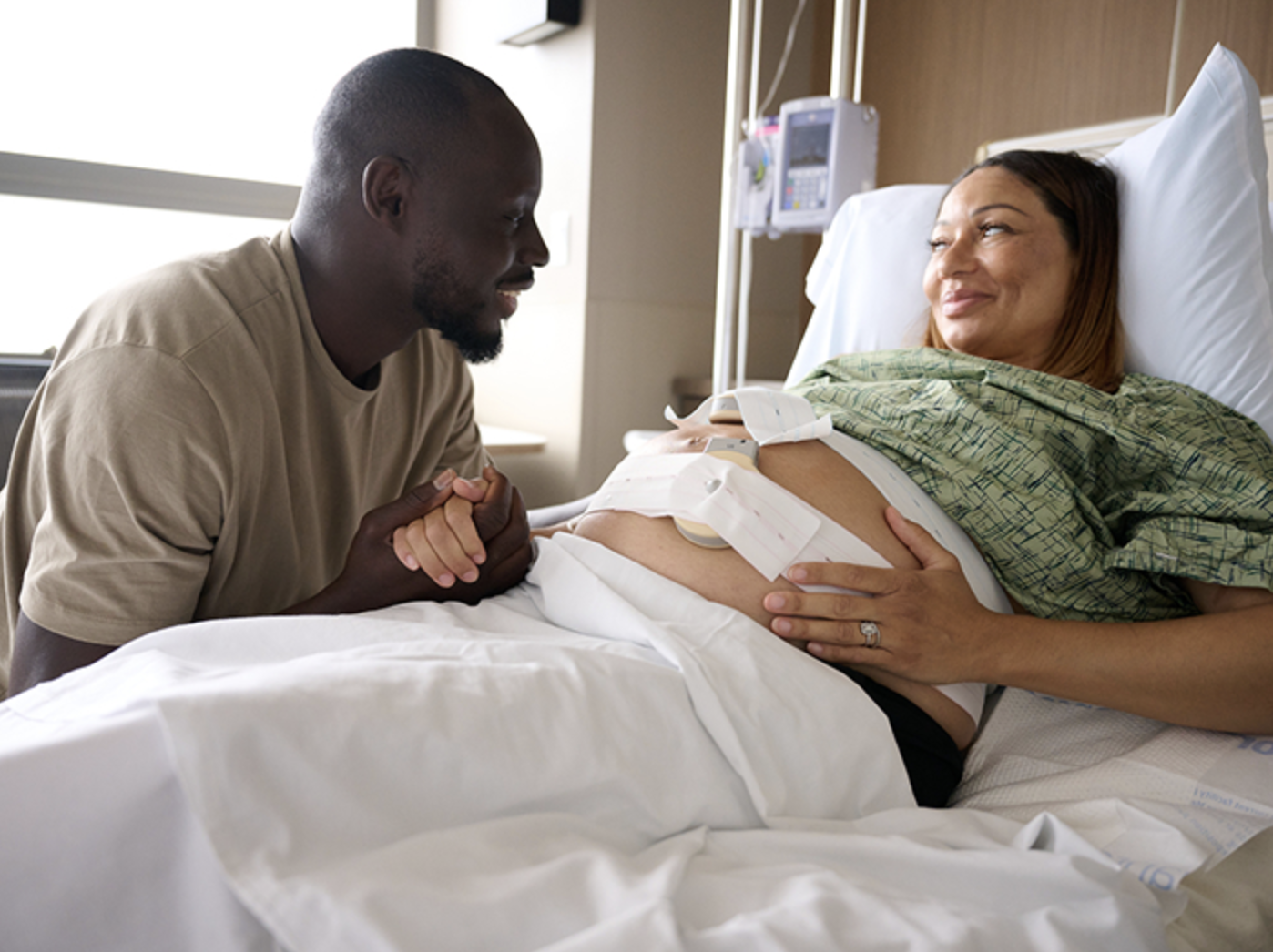
What about labor induction after 40 weeks?
Preparing to be pregnant for 42 weeks does not mean that I believe everyone should remain pregnant until 42 weeks.
Those are two very different things.
There are valid medical reasons for inducing labor both before and after an estimated due date. Some people also choose an elective induction based on their personal circumstances and preferences.
As pregnancy continues beyond 40 weeks, certain complications become more likely. These include reduced amniotic fluid, stillbirth, and other complications for both the birthing person and baby. While the absolute risk of stillbirth remains low, it is important to understand that the risk increases as pregnancy continues.
Induction is commonly discussed at 41 weeks and generally recommended by 42 weeks. Your provider may also recommend additional fetal monitoring if you remain pregnant at 41 weeks.
These conversations should take place with your healthcare provider and take into consideration your individual health, your baby's well-being, the available evidence, and your personal preferences.
If you notice decreased or changed fetal movement or other concerning symptoms, contact your maternity care team promptly. Never wait for your next scheduled appointment simply because you're hoping for spontaneous labor.
My role as your doula isn't to tell you whether or not to have an induction. It's to help you understand your options, identify questions you want to ask, and feel supported as you navigate those decisions.
Questions to ask your care provider before your due date
I encourage expectant parents to have conversations about late-term pregnancy well before they're in the thick of it.
Consider asking:
How do you typically approach pregnancies that go beyond 40 weeks?
At what point do you recommend induction, and why?
How might my individual health or pregnancy affect that recommendation?
What are the benefits and risks of waiting for spontaneous labor versus scheduling an induction?
What additional monitoring might be recommended?
If I choose to wait, what would cause us to reconsider that decision?
What induction methods might be available to me?
Having these conversations early gives you time to process information, explore your options, and ask follow-up questions without feeling rushed.
If you're unsure where to begin, I've created a free resource, 15 Questions to Spark Discussion with Your Care Provider, to help you have more meaningful conversations throughout your pregnancy.
Your body hasn't missed a deadline
There is nothing wrong with being ready to not be pregnant anymore.
You can be grateful for your pregnancy and tired of being pregnant. You can be excited to meet your baby and nervous about giving birth. You can hope for spontaneous labor and ultimately decide that an induction is the right choice for you.
All of these things can coexist.
When I encourage you to prepare to be pregnant for 42 weeks, I'm really encouraging you to leave room for the unexpected. To give yourself a little more grace. To loosen your grip on a date that was never a promise in the first place.
If your baby comes at 39 weeks, wonderful!
If you're still pregnant at 41 weeks, you haven't failed.
And if your birth involves an induction, that isn't a failure either.
Preparing for birth is about so much more than learning how to breathe through contractions or knowing when to head to the hospital. It's also about preparing your mind for the many ways your experience might unfold.
Your estimated due date is one small piece of a much bigger story.
Prepare for birth with confidence
As a birth doula and childbirth educator in Columbus, Ohio, I help expectant parents navigate the physical, emotional, and practical aspects of preparing for labor and birth.
Whether you're hoping for an unmedicated birth, planning to use an epidural, considering an induction, or simply wanting to feel more informed about your options, my self-paced online childbirth course, Your Birth, Your Options, was created with you in mind.
Because you don't have to know exactly how your birth will unfold to feel well prepared for it.
